
Key Takeaways:
- SEO Basics Win: Strong on-page SEO improves rankings, user engagement, and content discoverability across search engines.
- Intent Matters: Matching user search intent helps pages rank higher and keeps visitors engaged for longer sessions.
- Better Page Flow: Clear headings, short paragraphs, and bullet points improve readability and user navigation experience.
- Smart Keywords: Natural keyword placement helps search engines understand topics without hurting content readability.
- Faster Site Load: Optimized images and faster loading pages improve user experience and support stronger SEO performance.
- Internal Links: Strategic internal linking improves crawlability and helps users discover related website content easily.
- Fresh Content Wins: Updating outdated content with new insights helps maintain rankings and improve search visibility.
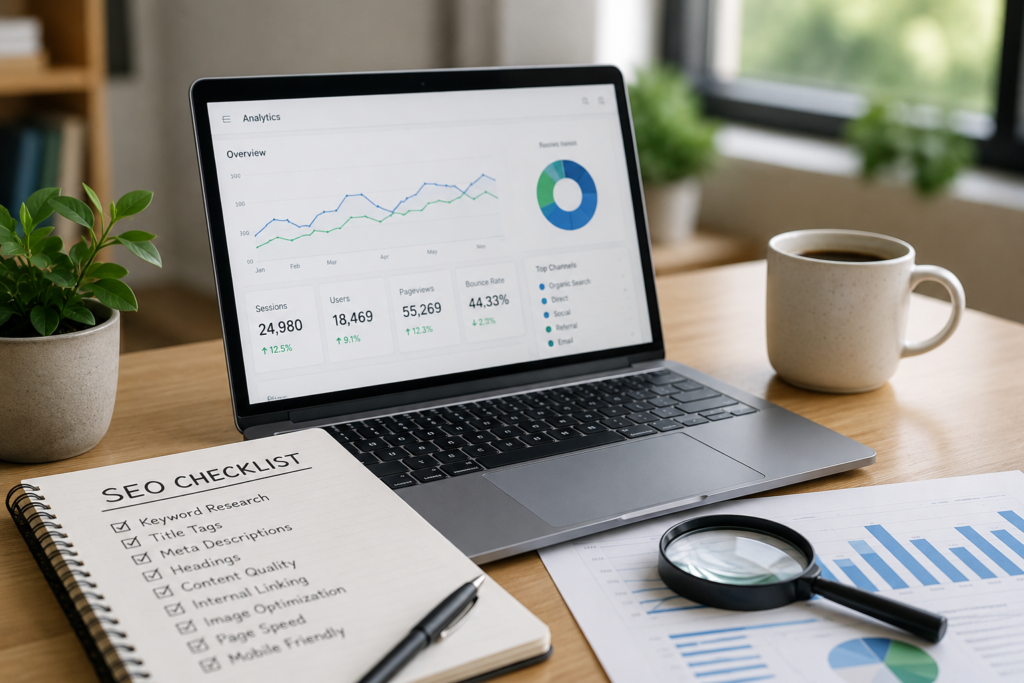
Search visibility is no longer about adding keywords everywhere and hoping pages rank. Modern on-page SEO focuses on clarity, relevance, content quality, and user experience. Search engines now evaluate how well a page answers a query, how easily users can navigate the content, and whether the information genuinely solves a problem.
A well-optimized page improves rankings, increases organic traffic, and creates better engagement signals. It also helps AI-powered search systems understand context, extract key insights, and surface content more accurately in search results.
This checklist covers the most important on-page SEO elements businesses should improve to strengthen visibility, improve usability, and create pages that perform consistently over time.
Keyword Research Checklist
Keyword research shapes the direction of every successful page. Without understanding what users search for, content often becomes too broad or disconnected from actual intent.
Identify One Primary Keyword
Every page should target one clear primary keyword aligned with a specific search intent.
Important considerations:
- Focus on one main topic per page
- Match the keyword with user intent
- Analyze ranking difficulty
- Review search volume trends
- Avoid targeting unrelated keywords together
For example, a guide targeting “on-page SEO checklist” should focus on educational intent rather than transactional or product-focused searches.
Find Supporting Keywords
Supporting keywords help expand topical relevance naturally.
Useful keyword variations include:
- Long-tail keywords
- Semantic keyword phrases
- Related entities
- Common user questions
- Search modifiers
Instead of repeating the same phrase, build content around connected concepts users typically explore after the initial query.
Analyze Competitor Pages
Competitor analysis helps identify missing opportunities.
Things to review:
- Heading structure
- Content depth
- Internal linking
- Featured snippet formatting
- Content freshness
- User experience quality
The goal is not copying competitors. The goal is creating more useful, better-structured content.
SEO Title Tag Optimization
The title tag strongly influences both rankings and click-through rates. It is often the first thing users notice in search results.
Best Practices for SEO Titles
A good SEO title should:
- Include the primary keyword naturally
- Stay within recommended length
- Clearly explain page value
- Match search intent
- Encourage clicks without sounding misleading
Examples of effective wording:
- Complete Guide
- Step-by-Step
- Practical Checklist
- Beginner Friendly
- Expert Tips
Strong titles improve visibility while setting accurate expectations for readers.
Meta Description Checklist
Meta descriptions help improve click-through rates by summarizing the page clearly.
Write Descriptions That Improve CTR
Effective meta descriptions usually:
- Explain the page quickly
- Include relevant keywords naturally
- Use clear and readable language
- Encourage action
- Avoid unnecessary filler
Good meta descriptions often answer:
- What is this page about?
- Who is it for?
- Why should someone click?
Common Mistakes to Avoid
Avoid these issues:
- Duplicate descriptions
- Keyword stuffing
- Generic summaries
- Overly long text
- Missing descriptions
Search engines may rewrite snippets, but optimized descriptions still improve visibility and engagement.
URL Optimization Checklist
URLs should remain simple, readable, and descriptive.
Create SEO-Friendly URLs
A clean URL structure improves usability and crawlability.
Best practices include:
- Keep URLs short
- Use hyphens
- Avoid random numbers
- Include relevant keywords
- Remove unnecessary folders
Example:
/on-page-seo-checklist/
Simple URLs are easier for both users and search engines to understand.
Avoid Poor URL Structures
Poor URL structures often include:
- Dynamic parameters
- Confusing paths
- Unnecessary categories
- Long unreadable strings
When URLs change, always implement proper redirects to maintain SEO value.
Heading Structure Checklist
Headings improve readability and help search engines understand page organization.
Why Proper Heading Structure Matters
A strong heading hierarchy improves both scanning and comprehension.
Important practices include:
- Use one H1 per page
- Break sections logically
- Keep headings descriptive
- Avoid keyword repetition
- Match headings with actual content
Users often scan before reading fully. Clear headings help them find answers faster.
Content Optimization Checklist
Content quality remains one of the strongest ranking factors.
Create Useful and Original Content
High-performing content should:
- Solve real problems
- Explain concepts clearly
- Offer actionable insights
- Include practical examples
- Avoid shallow information
Search engines prioritize pages that genuinely help users complete tasks or understand topics.
Improve Readability
Readable content improves retention and engagement.
Ways to improve readability:
- Use short paragraphs
- Add bullet points
- Break long sections
- Use examples naturally
- Maintain conversational flow
Dense content often causes users to leave pages quickly.
Match User Search Intent
Search intent determines whether content satisfies users.
Common intent categories:
- Informational
- Commercial
- Transactional
- Navigational
If someone searches for a checklist, they expect actionable steps, not long theoretical explanations.
Strategic Keyword Placement
Keyword placement still matters, but overuse creates poor reading experiences.
Where Keywords Should Appear
Natural placement areas include:
- Introduction
- Headings
- Image alt text
- Meta title
- Meta description
- URL
- Conclusion
The focus should remain on clarity rather than repetition.
Avoid Keyword Stuffing
Over-optimization often harms readability.
Instead:
- Use synonyms
- Add semantic variations
- Write naturally
- Prioritize user experience
Modern SEO rewards topical coverage more than keyword density.
Internal Linking Checklist
Internal linking improves crawlability and strengthens topic relationships across a website.
Build Strong Internal Link Structures
Internal links help users discover additional relevant content.
Good internal linking practices:
- Link related articles
- Use descriptive anchor text
- Support topic clusters
- Connect pillar and supporting pages
- Reduce orphan pages
Strong internal linking improves both navigation and authority distribution.
Improve User Navigation
Users should move naturally between connected topics.
Helpful linking opportunities include:
- Related guides
- Service pages
- Tutorials
- FAQs
- Supporting blog content
Relevant links improve session duration and reduce navigation friction.
External Linking Checklist
External links strengthen credibility when used properly.
Link to Trusted Sources
Reliable outbound links help support claims and improve trust.
Good sources include:
- Government websites
- Industry research
- Authoritative blogs
- Official documentation
- Reputable studies
External links should add value instead of distracting users.
Maintain Link Quality
Regularly review:
- Broken links
- Outdated references
- Redirect chains
- Low-quality sources
Broken outbound links create poor user experiences and reduce content reliability.
Image SEO Checklist
Images improve engagement, but unoptimized visuals can slow pages significantly.
Optimize Image Performance
Important image optimizations include:
- Compress large files
- Use modern formats
- Resize images properly
- Enable responsive scaling
- Reduce unnecessary graphics
Fast-loading visuals improve both user experience and Core Web Vitals.
Improve Image SEO
Image optimization should also include:
- Descriptive alt text
- Proper filenames
- Accessibility improvements
- Contextual relevance
Alt text should explain image purpose clearly rather than stuffing keywords.
Technical On-Page SEO Checklist
Technical improvements support crawlability, indexing, and usability.
Improve Website Speed
Page speed directly affects engagement.
Key speed optimizations:
- Minimize render-blocking scripts
- Compress assets
- Improve server response
- Enable caching
- Optimize images
Slow pages increase bounce rates and reduce conversions.
Ensure Mobile Optimization
Mobile usability is essential because most searches happen on mobile devices.
Important mobile factors:
- Responsive layouts
- Easy navigation
- Readable text
- Proper spacing
- Fast mobile loading
Mobile-friendly experiences improve both rankings and usability.
Use HTTPS Security
Secure websites build trust and protect user data.
Security improvements include:
- HTTPS implementation
- SSL certificates
- Updated software
- Secure forms
- Malware protection
Security issues can damage both rankings and user confidence.
Structured Data Optimization
Structured data helps search engines understand page content more effectively.
Implement Schema Markup
Useful schema types include:
- Article schema
- FAQ schema
- Product schema
- Breadcrumb schema
- Review schema
Schema can improve eligibility for enhanced search results.
Validate Structured Data
Always test schema implementation to identify errors.
Validation tools help detect:
- Missing properties
- Invalid formatting
- Broken markup
- Incorrect nesting
Accurate structured data reduces confusion for search engines.
User Experience Optimization
Search engines increasingly evaluate user interaction signals.
Improve Page Engagement
Better engagement often comes from better usability.
Ways to improve engagement:
- Clear formatting
- Faster loading
- Helpful content
- Logical structure
- Better readability
Pages should deliver answers quickly without unnecessary distractions.
Improve Accessibility
Accessibility improvements benefit all users.
Helpful accessibility features:
- Proper contrast
- Readable typography
- Keyboard navigation
- Screen-reader compatibility
- Clear labels
Accessible websites often perform better overall because they create smoother user experiences.
Content Freshness Checklist
Outdated content gradually loses visibility.
Update Existing Content Regularly
Refreshing pages helps maintain rankings.
Update opportunities include:
- New statistics
- Updated screenshots
- Better examples
- Improved formatting
- New industry insights
Content updates also help maintain relevance for evolving search behavior.
Improve Accuracy
Users expect reliable information.
Review regularly for:
- Broken references
- Old recommendations
- Inaccurate details
- Outdated tools
- Expired links
Accurate content builds long-term authority.
Featured Snippet Optimization
Featured snippets increase visibility significantly.
Structure Content Clearly
Snippet-friendly formatting includes:
- Numbered lists
- Short definitions
- Clear summaries
- Direct answers
- Step-by-step explanations
Search engines prefer concise and structured responses.
Optimize for AI Search
AI-powered search systems prioritize content that is easy to interpret.
Helpful formatting strategies:
- Conversational structure
- Direct answers
- Clear section organization
- Concise explanations
- Logical hierarchy
Content written clearly improves extraction accuracy across AI search experiences.
Common On-Page SEO Mistakes
Many websites lose visibility because of preventable optimization issues.
Avoid Duplicate Content
Duplicate pages confuse search engines.
Solutions include:
- Canonical tags
- Content consolidation
- Unique metadata
- Proper redirects
Every page should serve a distinct purpose.
Prevent Over-Optimization
Too much optimization creates unnatural experiences.
Avoid:
- Excessive keyword repetition
- Forced internal links
- Unnatural headings
- Spam-like formatting
SEO should support readability rather than disrupt it.
Fix Broken SEO Elements
Common technical issues include:
- Missing title tags
- Empty meta descriptions
- Broken internal links
- Slow-loading assets
- Indexing errors
Small technical fixes can produce significant SEO improvements.
On-Page SEO Tools
SEO tools help identify optimization opportunities faster.
Useful SEO Analysis Tools
Popular platforms include:
- Semrush
- Ahrefs
- Moz
- Surfer SEO
- Clearscope
These tools help with keyword analysis, competitor research, and optimization tracking.
Technical SEO Tools
Technical auditing tools include:
- Google Search Console
- Screaming Frog
- PageSpeed Insights
- Lighthouse
- GTmetrix
These tools help identify crawlability and performance issues.
Measuring On-Page SEO Success
SEO improvements should always be measured over time.
Important SEO Metrics
Key performance indicators include:
- Organic traffic
- Keyword rankings
- Click-through rate
- Bounce rate
- Session duration
- Conversion rates
Tracking helps determine which optimizations create measurable improvements.
Monitor User Behavior
User behavior signals provide useful insights.
Review:
- Scroll depth
- Exit pages
- Engagement time
- Navigation patterns
- Returning visitors
Behavior data often reveals hidden usability issues.
Advanced On-Page SEO Strategies
Modern SEO increasingly focuses on context and topical authority.
Semantic SEO Optimization
Semantic SEO improves contextual relevance.
Helpful strategies include:
- Cover related concepts
- Explain entities clearly
- Expand topical depth
- Use natural language
- Answer related questions
Search engines now evaluate topic understanding more than exact-match keyword repetition.
Search Experience Optimization
Search experience optimization focuses on usability first.
Important improvements include:
- Better page structure
- Faster answers
- Clear navigation
- Helpful content flow
- Reduced friction
SEO and user experience now work together rather than separately.
Final Thoughts
On-page SEO remains one of the most controllable parts of search optimization. Businesses that improve page structure, content quality, technical performance, and user experience consistently create stronger search visibility over time.
The most effective SEO strategies are not built around shortcuts. They focus on understanding what users need, organizing information clearly, and making pages easier to access and trust.
Instead of trying to optimize everything at once, start with one important page:
- Improve keyword intent alignment
- Rewrite titles and descriptions
- Strengthen heading structure
- Add internal links
- Improve readability
- Optimize page speed
Small improvements across core on-page SEO elements often produce meaningful long-term growth. With the right strategy and consistent optimization, Pixel Technolabs helps businesses create search-friendly pages that are structured for users, search engines, and long-term digital growth.